
The DHST Commission on the History of Oceanography (ICHO) is pleased to announce the winner of its 2025 Jacqueline Carpine-Lancre Early Career Scholars Prize. The award aims to provide recognition and support for early career scholars who are developing ocean history through their scholarship. Papers must be historical, but in recognition that many disciplines engage the oceans historically and substantively, ICHO encouraged submissions from fields across the humanities and social sciences.
This award is named in honor of Mme. Jacqueline Carpine-Lancre (1933-2022). Mme. Carpine-Lancre played a crucial role in the early establishment of ICHO, serving as its secretary from 1968 until 1997, and later as a vice-president from 1998-2011. Her involvement was instrumental in organizing our inaugural international meetings, completing the publication of conference proceedings, and developing the ICHO newsletter. Her extensive scholarship contributed broadly to the history of oceanography in Monaco and France, the history of polar oceanography, and the history of seafloor mapping. However, her impact extended far beyond her published work. She readily offered her expertise and guidance to help nurture the next generation of researchers and played a pivotal role in establishing an international network of historians focused on sharing their knowledge of the marine sciences. Through this award, we commemorate her remarkable legacy by promoting further research and fresh perspectives on ocean history and nurturing a global community of scholars.
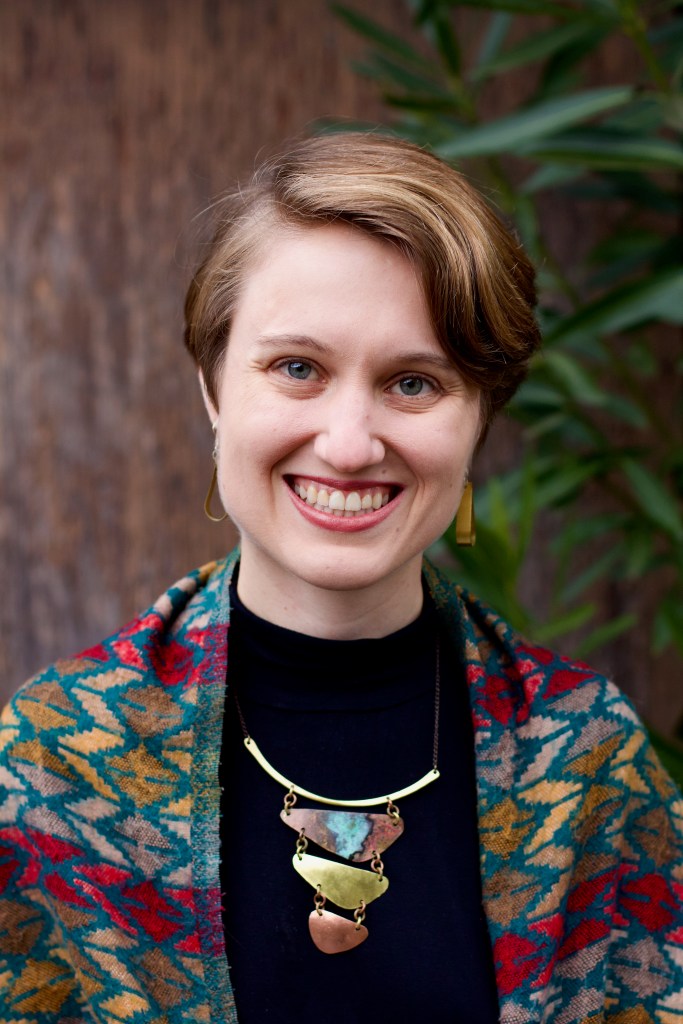
The 2025 winner of the Jacqueline Carpine-Lancre Early Career Scholars Prize is Meghan M. Shea, for her unpublished paper, “From Encounters to Environmental DNA: The Stakes of Changing Evidentiary Frames in Intertidal Research.” Shea’s “pitch,” a 500-word statement of the contribution of the work to ocean history, is published below. Shea is a Ph.D. candidate in the Emmett Interdisciplinary Program in Environment & Resources at Stanford University. This paper showed impressive interdisciplinary strengths, using ethnography, environmental history, history of science and ecology. Shea effectively combined a summary of the wide-ranging traditions of coastal observation with discussion of new kinds of evidence. This allows us to see the impact and implications of such evidence in context, pointing to their relevance for public and scientific understandings of marine biodiversity.
~~~
To accompany the submission of the prize-winning essay (which has been submitted for publication), Meghan wrote:
Solutions to contemporary ocean challenges require multiple interdisciplinary threads to be enacted: we need additional data and information to understand current threats to often understudied marine ecosystems as well as the political and social will to act on those data. Increasingly, however, these threads exist in opposition; the emerging tools and technologies—from remote sensing to autonomous vehicles to molecular tools—expanding our ability to monitor marine ecosystems at scale may also distance us from the very ecosystems we seek to understand and protect. Faced with an ever more datafied ocean, how can we maintain the vibrancy of human connections to watery places?
In the following article, I explore this challenge in one particular marine ecosystem—the Pacific rocky intertidal—in the face of a specific evidentiary challenge: the rise of molecular tools for monitoring marine biodiversity. The intertidal collapses categories—land and sea, public viewer and expert eyewitness—typically kept isolated, creating a boundary-blurring environment for tracing how new technologies might complicate efforts to expand the reach of who can generate scientific evidence. Beginning from Ricketts and Calvin’s Between Pacific Tides (1939), I use archival and textual analysis to show how a best-selling, paradigmatic field guide to marine invertebrates privileges a particular evidentiary frame: encounters as evidence. Then, I analyze how this frame comes to be embedded in or challenged by two contemporary technologies—the mobile application iNaturalist, which collates and curates observations from the public for scientific aims, and the scientific use of environmental DNA, which pushes against the primacy of the visual. Finally, I draw on participant observation and focus groups with a particular group of tide pool observers to understand the friction between previous ways of encountering intertidal ecosystems and the affordances of environmental DNA. Across a diverse set of disciplinary artifacts—from texts to technologies, archives to interviews—I advocate that as new technologies alter observational practices, we must remain attuned to the evidentiary frames that may govern their utility and reception.
While this article surfaces new critiques of the widespread deployment of molecular tools, it also encourages a more thoughtful—and interdisciplinary—path forward; as we study the technical bounds of new marine technologies, we also ought to probe their social histories, affordances, and consequences. As such, I hope this article models new ways of combining natural scientific, social scientific, and humanistic inquiry to reveal novel tensions in how we study and relate to ocean ecosystems. No matter the research locus—a marine technology, a group of ocean users, a specific oceanographic challenge—it is impossible to understand contemporary ocean issues without attention to their historical roots and context. Given the scale of contemporary ocean challenges and the breadth of accounts of human relationships to the sea, we need all hands on deck—and all disciplinary approaches in concert—to imagine new ocean futures.
 History of Oceanography