By Eric L. Mills
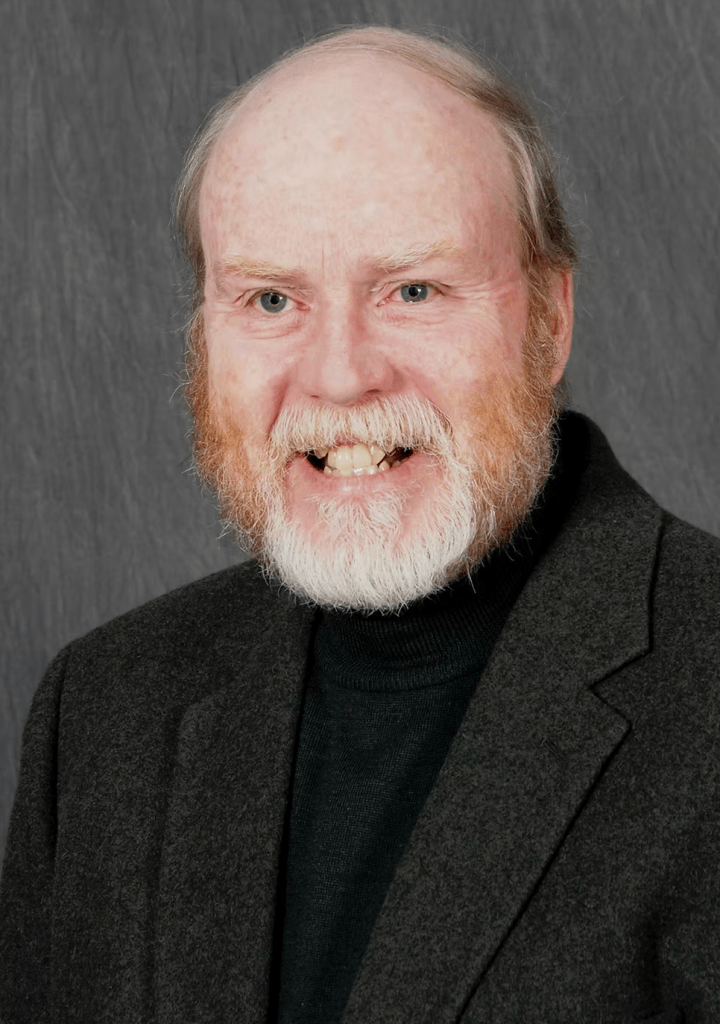
Gary Weir and I, after many close professional contacts beginning in 1993 when we met at the ICHO-V congress in La Jolla, lost contact for a time as our career and personal paths diverged. We renewed contact early in 2022, when he wrote:
“Yes, I am alive and well and at WHOI. I am with their Marine Policy Center, at distance via Zoom and email since I live in Flagler Beach, Florida. We are working on an exhibit using the service life of R/V Atlantis to track the evolution of oceanography as a multidisciplinary science. The project emulates an initiative of a similar type taken by the AIP [American Institute of Physics] using R/V Vema and focusing on Geophysics. It should form the first step in shaping the WHOI centennial, scheduled for 2030. I am also making a proposal to the conference in Bodo, Norway addressing the military/warfare side of their effort to examine the multiple ways the ocean has helped shape all that is in the USA. Hopefully they will accept my proposal.”
They did, although Gary presented his paper via Zoom, for as he told me he was seriously ill with kidney disease and having weekly dialysis treatments.
Much goes on below the surface of that succinct message. Although Gary was sometimes represented as a quintessentially American historian of government-sponsored science, he had a broad knowledge of European science and of nautical history. His doctoral thesis, at the University of Tennessee in 1982, dealt with the rise of the German Imperial Navy 1897-1912 during the critical period when Britain and Germany were engaged in an arms race on the oceans. His research was aided by an exchange scholarship in Germany, and years later I remember him switching from English into fluent German (albeit with a New York accent) during a conversation in Europe with one of our German colleagues. He was well aware that the history of oceanography is quintessentially international and not unilingual.
Gary’s CV is easily accessible in an obituary notice in the International Journal of Naval History (an online journal that he founded) dated 5 December 2025, and on his personal website. The information there is extensive, so my intent is to provide a brief summary and a personal commentary on Gary Weir’s career and influence as I saw them from our off-again-on-again contacts over four decades.
In brief, after Gary’s doctoral dissertation in 1982 at the University of Tennessee, he taught for a year in the U.S. Naval Academy before joining the Contemporary History Branch of U.S. Navy History and Heritage Command 1987-2006, where he rose to Branch Head. From 2006 to 2020 he was Chief Historian of the National Geospatial-Intelligence Agency, also in Washington. The latter period is hazy, at least to an outsider, because much of his work was classified. Before and during the Washington years Gary kept a toe in academia by teaching history and history of science for many years at the University of Maryland. He also attended many international meetings of historians of science, including those of the International Commission of the History of Oceanography beginning in 1993. Woods Hole, especially Woods Hole Oceanographic Institution, was his second home for many years. His knowledge of the archive at WHOI was encyclopedic, and it is not surprising that he was a guest investigator there from the early 1990s until his death. He coordinated research in Russian archives after the breakup of the Soviet Union and also supervised historical work on the attack on the Pentagon during 9/11 among many other history-related activities.
Gary’s scholarly output was prodigious even without considering his almost countless government reports. It centered around the history of naval technology from the onset of the First World War through the twentieth century, the increasing role of oceanographic information and institutions in the U.S. Navy, and the development of submarine warfare. Among his several books the best known to historians of oceanography is An Ocean in Common. American Naval Officers, Scientists, and the Ocean Environment (Texas A&M University Press, 2001), which traces out the singular evolution of oceanography in the United States along a different path from Europe. All his publications were based on the deeply rooted belief that (in his own words), “knowing the historical dynamics that produced the immediate situation can offer the best basis for a new generation of questions, policies, and developments.”
Gary Weir thought deeply about historiography. He also saw his craft as being a human one, to which he brought, in addition to high professional competence and intensity, humour, kindness and humanity. His many friends and colleagues have lost one of the best.
Eric L. Mills
Department of Oceanography, Dalhousie University
History of Science & Technology Programme, University of King’s College
12 December 2025

