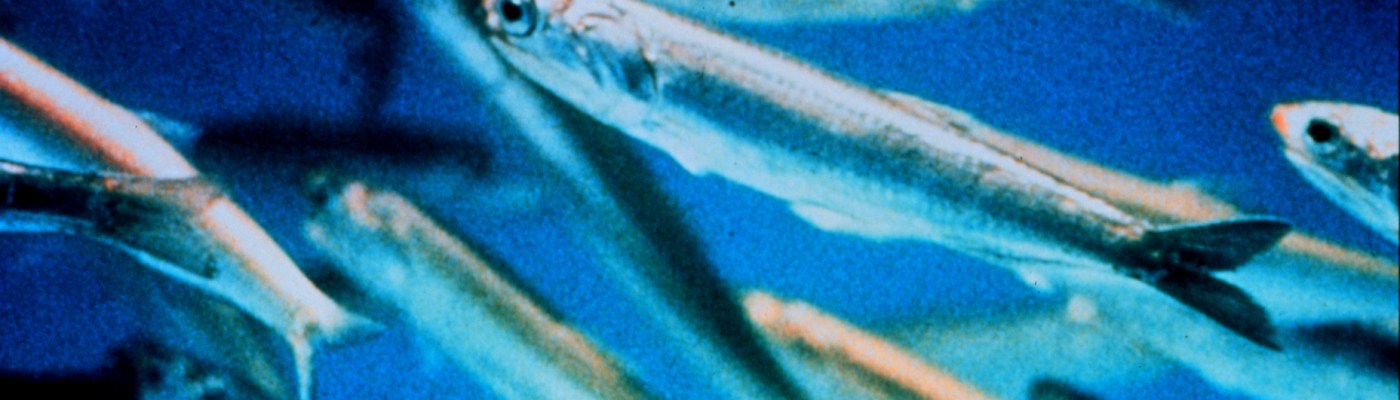
The DHST Commission on the History of Oceanography (ICHO) is pleased to announce the winner of its 2026 Jacqueline Carpine-Lancre Early Career Scholars Prize. The award aims to provide recognition and support for early career scholars who are developing ocean history through their scholarship. Papers must be historical, but in recognition that many disciplines engage the oceans historically and substantively, ICHO encouraged submissions from fields across the humanities and social sciences.
This award is named in honor of Mme. Jacqueline Carpine-Lancre (1933-2022). Mme. Carpine-Lancre played a crucial role in the early establishment of ICHO, serving as its secretary from 1968 until 1997, and later as a vice-president from 1998-2011. Her involvement was instrumental in organizing our inaugural international meetings, completing the publication of conference proceedings, and developing the ICHO newsletter. Her extensive scholarship contributed broadly to the history of oceanography in Monaco and France, the history of polar oceanography, and the history of seafloor mapping. However, her impact extended far beyond her published work. She readily offered her expertise and guidance to help nurture the next generation of researchers and played a pivotal role in establishing an international network of historians focused on sharing their knowledge of the marine sciences. Through this award, we commemorate her remarkable legacy by promoting further research and fresh perspectives on ocean history and nurturing a global community of scholars.
The 2026 winner of the Jacqueline Carpine-Lancre Early Career Scholars Prize is Aaron van Neste for their unpublished paper, “The Rise and Fall of the South African Pilchard and Anchovy Fisheries (1950-1980).” Van Neste’s “pitch,” a 500-word statement of the contribution of the work to ocean history, is published below. Dr. van Neste is an assistant professor of environmental studies at Oberlin College.
The study reveals the stakes of managing two species of small pelagic fish, pilchard and anchovy, through a short-lived “ecosystem experiment” off the coast of south-west Africa in the 1960s. With an impressive transnational approach that connects fisheries, fisheries science, and fisheries management in southern Africa and California, Van Neste conveys the ambitions of technocratic actors to control and manipulate marine environments. In its tight analysis of a “boom and bust” fishery, the paper combines stories of ships and nets, the intricate behavior of the coastal Benguela current, and the often bizarre relationships between regulatory practices, markets, and population models. The mismatch between the scope of ecological management claims and the frequently scanty substance that underpinned them emerges gives us a novel history of MSY (maximum sustainable yield)-in-action in an under-examined and politically important geographic context.
An honorable mention has been awarded:
Dr. Jonathan Galka, for his paper published in History and Philosophy of the Life Sciences (2025), “’The nodules are alive and well on the sea floor’: Deep Ocean Minerals, Invertebrate Traces, and Multispecies Histories of Abyssal Environments.” Dr. Galka is a Postdoctoral Fellow with the Science, Technology and Society (STS) Research Cluster at the Asia Research Institute, National University of Singapore and will be taking up the position of Assistant Professor in the Division of History of Science, Technology and Environment at KTH Royal Institute of Technology. This excellent paper addresses a topic, polymetallic nodules, that is both important and timely, given the current resurgence of interest in seabed mining. Drawing on an impressive range of archives, Galka shows that the framing of the nodules as geological, despite an active research effort to study them biologically, served to hinder understanding of their nature. Scientists who worked within frames of understanding based on inert geological resources did not see the active construction of the nodules by organisms evident to scientists familiar with deep sea biology. Seafloor life forms, however, helped author the seabed as both resource site and natural environment, even as scientists, policy makers and industrialists affirmed nodules as geological, ignoring their biology.
~~~~~~~~~~~~~~~~~
To accompany the submission of the prize-winning essay, Aaron van Neste wrote this pitch articulating the work as a contribution to ocean history.
The history of fisheries, and of fisheries science, has traditionally focused on the Global North. This geographic bias has meant much of the world’s ocean has been intensively fished but significantly understudied. This paper asks: what new stories emerge by centering the Benguela current fisheries of South Africa and occupied Namibia in the development of fisheries science and management during the 1950s-70s? What I found is a story of rampant commercial exploitation alongside scientifically novel, if not scientifically robust, ecosystem-scale experimentation.
Methodologically, this paper analyzes scientific papers, government reports, and newspaper and other media reports, particularly the South Africa Shipping News and Fisheries Industry Review (SASNFIR). I situate my work within the historical literature on small pelagic fish and fisheries, and fisheries science. Just as the ocean complicates terrestrial territorial conceptions, I aim to transcend traditional geographies by connecting the management and scientific histories of South Africa and occupied Namibia with global efforts to extract protein from the sea and scientifically manage small pelagic fish in upwelling currents.
While the overexploitation of small pelagic fish and the inappropriate application of the MSY paradigm are global themes, this paper also shows how the mid-century South African context uniquely influenced the outcome. Inadequate resources forced monitoring projects to be abruptly terminated; corruption and cronyism were widely accepted; and the context of Apartheid and the occupation of Namibia affected both who was fishing and what regulation could be implemented.
Small pelagic fish constitute a major portion of global fish biomass and fisheries catch, and play a critical role in regulating upwelling ecosystems. They also are among the most difficult fish to manage, since their populations adapted to “boom-and-bust” recruitment fluctuations in constantly shifting environments. Upwelling systems experience irregular multidecadal regime shifts, where sardines, anchovies, herring, and other fish alternate dominance. The effort of scientists to make small pelagic fish populations follow the assumptions of population dynamics models like maximum sustained yield (MSY), and the friction generated by the fish resisting these simple models, is an emerging story in the history of fisheries science and oceanography broadly. In contributing to it, I am indebted to the work of Carmel Finley, Jennifer Hubbard, Helen Rozwadowski, Vera Schwach, Arthur McEvoy, Tim Smith, and many others, as well as histories of small pelagic fisheries by Gregory Cushman, Gregory Ferguson-Cradler, Kristin Wintersteen, Alessandro Antonello, Jack Bouchard, W. Jeffrey Bolster, Matthew McKenzie, and Connie Chiang, and Lance van Sittert’s work on the history of South African fisheries.
This story of science is also a history of ignorance, drawing on the work of Naomi Oreskes, (or perhaps of optimism driving baffling policy decisions). Scientists and historians alike often argue that fisheries are naïve prior to overexploitation, believing innocently that the sea is inexhaustible. This paper shows that the inexhaustibility myth is not necessarily naïve, but can be produced alongside cutting-edge science. South African management and industry in the 1950s did not believe this myth. By the mid-1960s, it appears they did.

